

Top 10 Countries with the Most Ethnic Groups Worldwide
India tops global ethnic diversity rankings with 2,500 groups. Discover how India, Indonesia, and others shape the world's rich cultural landscape.

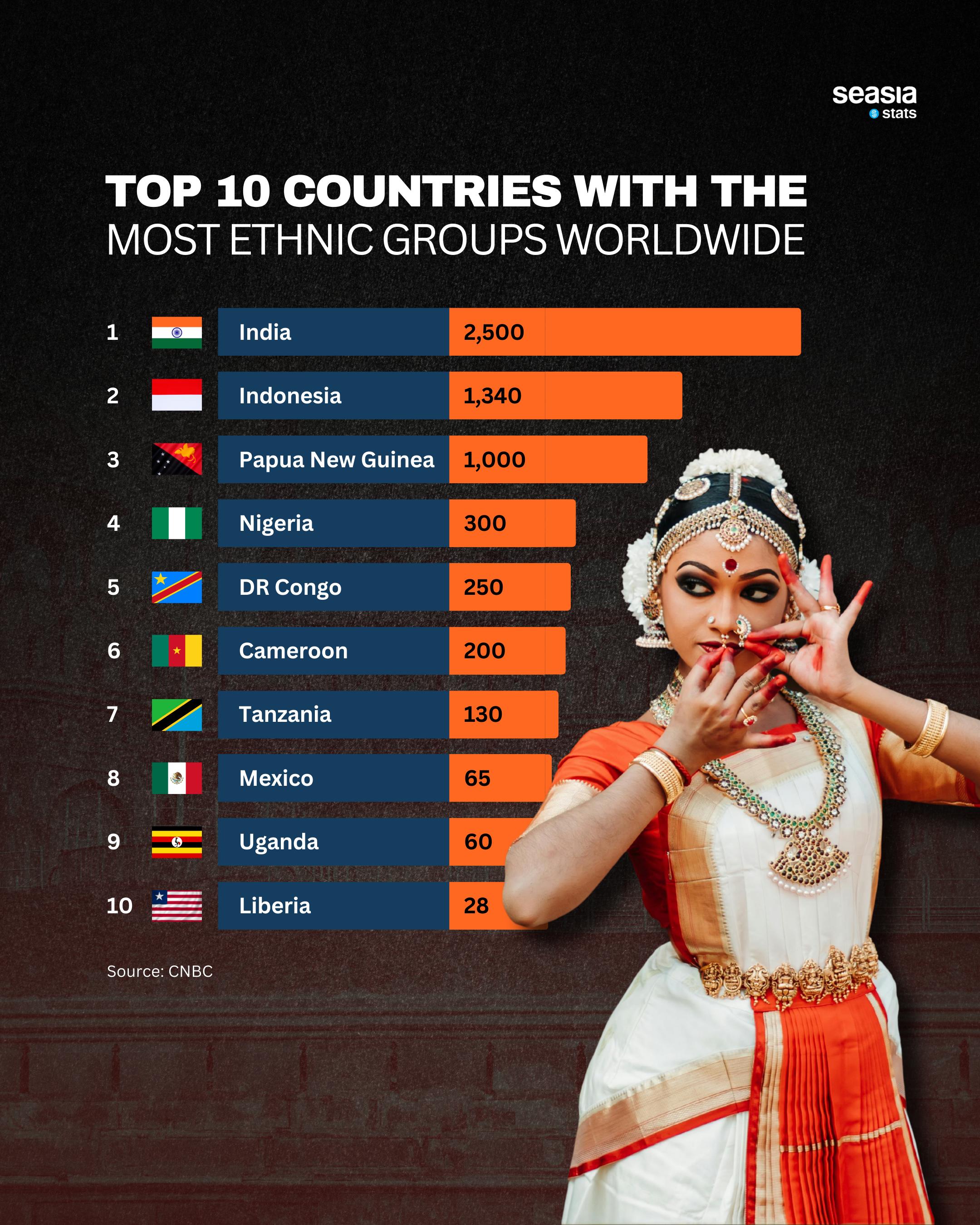
India stands out as the country with the most ethnic diversity in the world, hosting an astonishing 2,500 distinct ethnic groups. This diversity is not just reflected in the variety of languages spoken, but also in the numerous cultures, traditions, and practices that span the country’s vast geographic and social landscape. From the Indo-Aryan and Dravidian communities to a variety of tribal and indigenous groups, India’s cultural mosaic is truly unique.
The richness of India's ethnic diversity also plays a significant role in its social fabric, where local traditions, rituals, and celebrations vary from region to region. The diverse traditions are maintained through generations and contribute significantly to the cultural depth and vibrancy of the nation. India's ethnic diversity is a source of pride, as it allows for a constantly evolving mix of heritage, language, and customs.
Indonesia and Papua New Guinea: Close Contenders
Following India, Indonesia takes second place with 1,340 ethnic groups, showcasing its own rich diversity across the 17,000 islands that make up the archipelago. From Javanese and Balinese to hundreds of smaller indigenous communities, Indonesia's ethnic variety plays an essential role in the nation’s identity. With its complex cultural history and the interaction of various religions, languages, and traditions, Indonesia exemplifies how diversity enriches a nation's culture.
In third place is Papua New Guinea, which is home to around 1,000 distinct ethnic groups. The country’s mountainous regions and dense forests have helped preserve its cultural diversity, with many tribes living in isolation, maintaining unique languages, customs, and traditions. Papua New Guinea's ethnic diversity is one of the highest in the world relative to its population size, underscoring the importance of preserving indigenous languages and cultures in the face of modernization.
Other Countries with Significant Ethnic Diversity
Several other nations also feature prominently in the list of the most ethnically diverse countries. Nigeria, with its 300 ethnic groups, ranks as the most diverse nation in Africa, offering a complex blend of languages, religions, and cultures. Similarly, the Democratic Republic of the Congo (DRC), with 250 ethnic groups, reflects the diversity found across Central Africa, where ethnic boundaries often overlap and blend across regions.
Cameroon (200), Tanzania (130), Mexico (65), and Uganda (60) also make the list, with each country showcasing significant ethnic and linguistic diversity. These countries’ varied populations offer a window into the rich cultural traditions that are woven into the very fabric of their societies. Whether through the many indigenous languages spoken or the variety of ethnic groups that live together, these countries contribute to the global understanding of ethnic diversity.
The Importance of Ethnic Diversity in Shaping Global Culture
The ethnic diversity found in countries like India, Indonesia, and Papua New Guinea serves as a powerful reminder of the vast array of human cultures that shape our world. From different customs and practices to languages and belief systems, each ethnic group brings something unique to the global conversation. Understanding and respecting this diversity is crucial as it fosters inclusivity, innovation, and global collaboration.
This ranking by Seasia Stats helps highlight how crucial it is to preserve cultural identities, languages, and practices for future generations. In a rapidly globalizing world, maintaining ethnic diversity helps ensure that the rich variety of human cultures continues to thrive, adding depth and richness to the shared human experience.