

Top 15 Maritime Cities in the World in 2026
Singapore is still the top maritime city in the world.

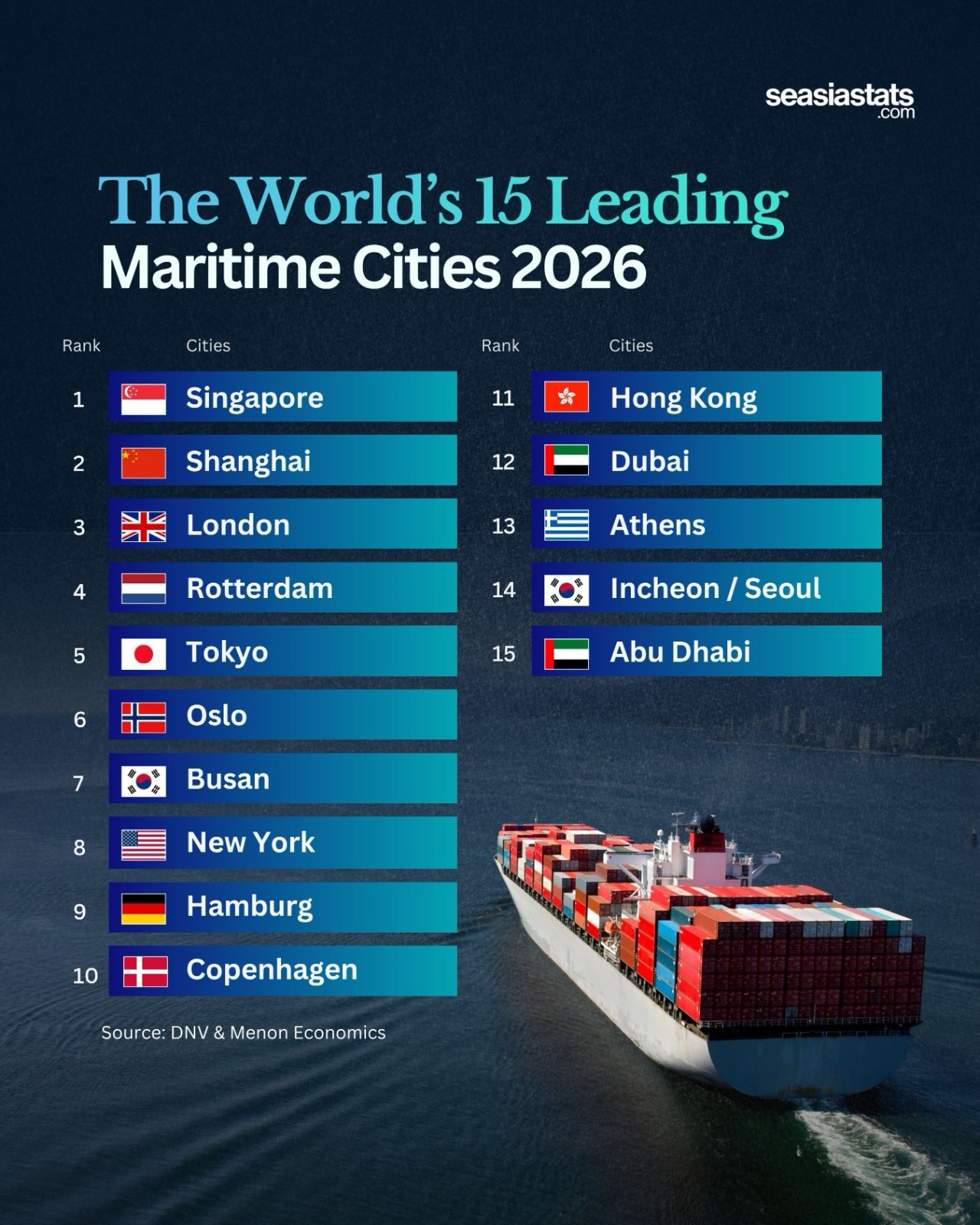
Maritime cities play a vital role in the global economy by connecting international markets, facilitating international trade, and supporting the shipping, logistics, and shipbuilding industries.
As global trade continues to expand and the maritime sector embraces digitalization and sustainability, several cities have established themselves as important centers of maritime excellence.
According to the Leading Maritime Cities of the World 2026 report by DNV and Menon Economics, Singapore leads the global maritime landscape, followed by other influential cities across Asia, Europe, and the Middle East.
Singapore takes the top position as the world's leading maritime city in 2026, supported by its world-class port infrastructure, strategic geographical location, international shipping connections, and strong maritime services industry.
Shanghai, China, ranks second, benefiting from its enormous container port, shipbuilding capabilities, and growing maritime technology sector. London, United Kingdom, secures third place, recognized for its international maritime finance, marine insurance, legal services, and shipping expertise.
Rotterdam, Netherlands, ranks fourth, maintaining its reputation as one of Europe's most important maritime gateways through its advanced port facilities, logistics networks, and commitment to sustainable shipping.
Tokyo, Japan, completes the top five, supported by its strong shipping industry, advanced technology, and significant role in international maritime business.
Oslo, Norway, also stands out as an influential maritime center, particularly in maritime finance, technological innovation, and environmentally friendly shipping solutions. Busan, South Korea, follows with its major port infrastructure, internationally competitive shipbuilding industry, and growing maritime technology capabilities.
Meanwhile, New York, United States, maintains an important position through its maritime finance, legal services, and connections to international business networks.
Hamburg, Germany, remains one of Europe's leading maritime cities, supported by its historic port, shipping companies, and extensive logistics infrastructure. Copenhagen, Denmark, is another important maritime center, recognized for its shipping expertise, maritime business environment, and commitment to sustainable development.
Hong Kong, China, continues to play a significant role in international shipping and maritime services, connecting Asian markets with global trade routes.
Dubai, United Arab Emirates, is strengthening its maritime influence through major investments in port infrastructure, logistics, and international shipping. Athens, Greece, is particularly important to the global shipping industry because of the country's influential ship-owning community and extensive maritime heritage.
Incheon / Seoul, South Korea, also represents a significant maritime and industrial center, benefiting from the country's advanced manufacturing capabilities, international trade connections, and maritime technology expertise.
Finally, Abu Dhabi, United Arab Emirates, completes the list of 15 leading maritime cities, supported by investments in port development, shipping infrastructure, logistics, and maritime-related industries.
Overall, the 2026 report highlights the importance of these global maritime centers in shaping the future of international shipping.
From Singapore's world-leading port ecosystem to Europe's established maritime financial centers and the Middle East's expanding logistics hubs, these cities demonstrate how innovation, infrastructure, and international connectivity contribute to maritime competitiveness.
As the industry moves towards digitalization and decarbonization, their roles will become increasingly important in building a more efficient, resilient, and sustainable global maritime economy.