

Top Countries by Number of Native Chinese Speakers, 2024
As of July 2024, there are approximately 1.3 billion native Chinese speakers worldwide, encompassing various dialects, including Mandarin, Cantonese, and other

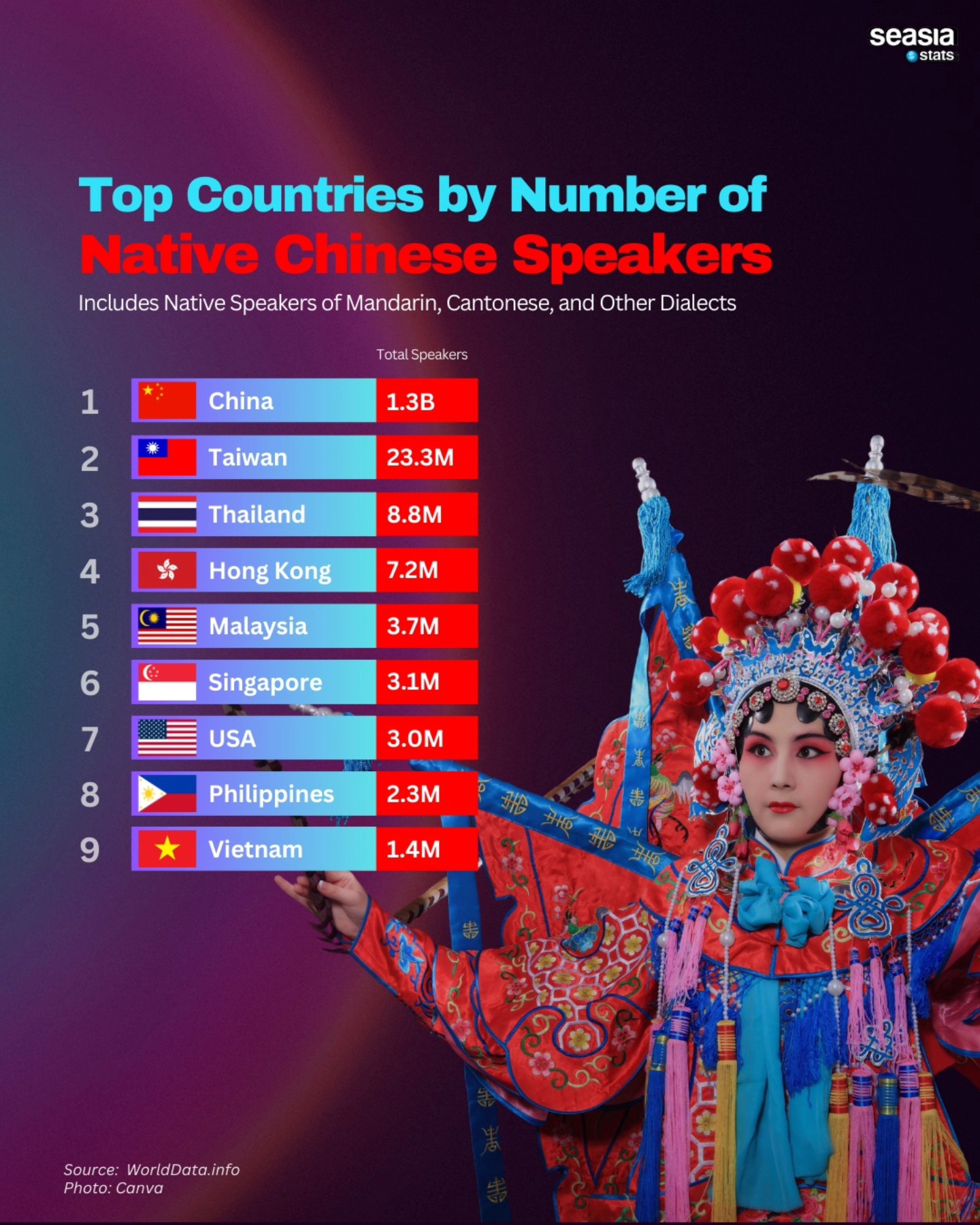
As of July 2024, there are approximately 1.3 billion native Chinese speakers worldwide, encompassing various dialects, including Mandarin, Cantonese, and other regional languages. This linguistic diversity primarily stems from the Han ethnic group, which constitutes the majority in China. The following countries represent significant populations of native Chinese speakers, with a particular focus on Southeast Asia.
1. China
China is the leading country by a vast margin, with the overwhelming majority of native speakers residing here. Mandarin, or Standard Chinese, serves as the official language, rooted in the Beijing dialect. It is the primary language for communication across the nation and is used in education, media, and government. Other dialects, such as Cantonese, Wu, and Min, also have significant speaker populations within various regions.
2. Taiwan
Taiwan has approximately 23.3 million native Chinese speakers, with Mandarin being the dominant language. While Mandarin is the official language, Taiwanese Hokkien and Hakka are also spoken by significant portions of the population, contributing to the linguistic richness of the island.
Southeast Asia's Chinese Speaker Population
3. Thailand
According to WorldData.info's July 2024 update, Thailand leads Southeast Asia in the number of native Mandarin speakers, with around 8.8 million speakers. The presence of a substantial Chinese community, particularly in cities like Bangkok and Chiang Mai, has facilitated the spread of Chinese dialects. Thai-Chinese individuals often speak Mandarin at home while using Thai in their daily lives.
4. Hong Kong
Hong Kong, with a population of 7.2 million native speakers, primarily uses Cantonese, which is a major variant of Mandarin. Cantonese is deeply embedded in the local culture, media, and education, making it an essential part of daily life in the region.
5. Malaysia
Malaysia boasts about 3.7 million native Chinese speakers, with Mandarin being widely spoken among the Chinese ethnic community. The diverse Chinese dialects, including Cantonese, Hokkien, and Teochew, contribute to the multicultural tapestry of Malaysia.
Additional Notable Countries
6. Singapore
Singapore has approximately 3.1 million native Chinese speakers, where Mandarin serves as one of the official languages. The government promotes the use of Mandarin among the Chinese community to preserve cultural heritage and facilitate communication.
7. USA
In the United States, around 3.0 million people speak Chinese, including various dialects. The Chinese-speaking population continues to grow due to immigration and the establishment of Chinese communities across major cities.
8. Philippines
With around 2.3 million native Chinese speakers, the Philippines has a vibrant Chinese community, especially in urban areas. Mandarin and other dialects like Hokkien are commonly spoken among Filipino-Chinese individuals.
9. Viet Nam
Viet Nam has approximately 1.4 million native Chinese speakers, primarily among the ethnic Chinese community known as Hoa. They maintain their language and cultural traditions while integrating into Vietnamese society.
Conclusion
The presence of native Chinese speakers in Southeast Asia, particularly in Thailand, showcases the region's rich cultural diversity. As Mandarin continues to gain prominence globally, its speakers in these countries contribute significantly to the social and economic fabric of their respective societies. Understanding these linguistic dynamics is essential for fostering cross-cultural communication and promoting mutual understanding in the region.