

Traditional Pancakes from Southeast Asia
Southeast Asia has a diverse selection of pancakes with different shape, textures, and tastes .

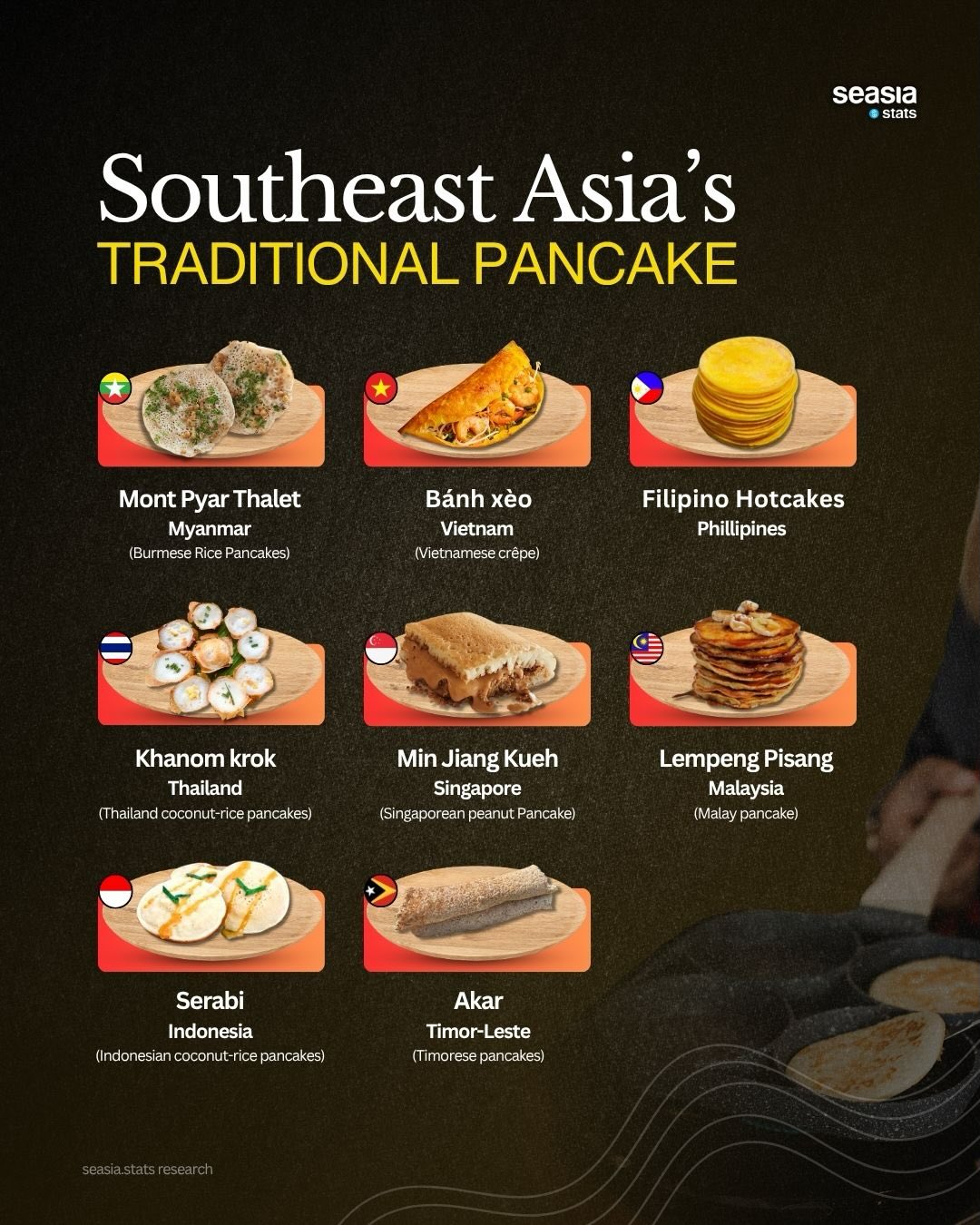
Traditional pancakes across Southeast Asia reflect the region’s diversity in ingredients, cooking techniques, and cultural influences. Though they share a broad resemblance as griddle-cooked treats, each country has developed its own distinctive version, shaped by local tastes and traditions.
In Myanmar, Mont Pyar Thalet is a beloved street snack made from rice flour batter. Cooked in small rounds, it often includes toppings such as quail eggs, chickpeas, or scallions, giving it a savory profile. Vendors typically prepare it fresh in roadside stalls, making it a popular quick bite.
Viet Nam’s Banh Xeo is a larger, crispy pancake known for its bright yellow color from turmeric. Made from rice flour and coconut milk, it is filled with shrimp, pork, and bean sprouts. Diners usually wrap pieces in lettuce or herbs and dip them in fish sauce, creating a balance of textures and flavors.
In the Philippines, Filipino Hotcakes are a sweet, fluffy variation influenced by American-style pancakes. Commonly sold by street vendors, they are topped with margarine, sugar, or syrup and are especially popular as an affordable snack for children and commuters.
Thailand’s Khanom Krok offers a unique texture with its crisp outer shell and soft, creamy interior. Made from rice flour and coconut milk, these small, round pancakes are cooked in a special cast-iron pan and often topped with ingredients like green onions or sweet corn.
Singapore’s Min Jiang Kueh—also known as peanut pancake—is thicker and folded, typically filled with ground peanuts and sugar. It reflects Chinese culinary influence and is widely available in markets and hawker centers, with modern variations including chocolate or cheese fillings.
In Malaysia, Lempeng Pisang highlights the use of bananas, a staple ingredient in tropical regions. The batter combines mashed bananas with flour and coconut milk, resulting in a naturally sweet and aromatic pancake that is often eaten for breakfast or tea.
Indonesia’s Serabi is another coconut-based pancake, traditionally cooked in clay pans. It can be served plain with palm sugar syrup or topped with savory ingredients. Regional variations exist, with some versions being soft and spongy while others are slightly crispy.
Finally, Timor-Leste’s Akar represents a simpler yet culturally meaningful pancake. Made from basic ingredients like flour and water or coconut milk, it reflects local resourcefulness and is often enjoyed during gatherings or daily meals.
Together, these pancakes showcase Southeast Asia’s rich culinary heritage. While they differ in flavor—ranging from sweet to savory—they all emphasize fresh, local ingredients and communal eating traditions. Exploring them offers insight not only into food culture but also into the histories and daily lives of the people across the region.