

Unemployment Rates in Southeast Asia in 2026
The Philippines has the highest unemployment rate in Southeast Asia while Thailand has the lowest.

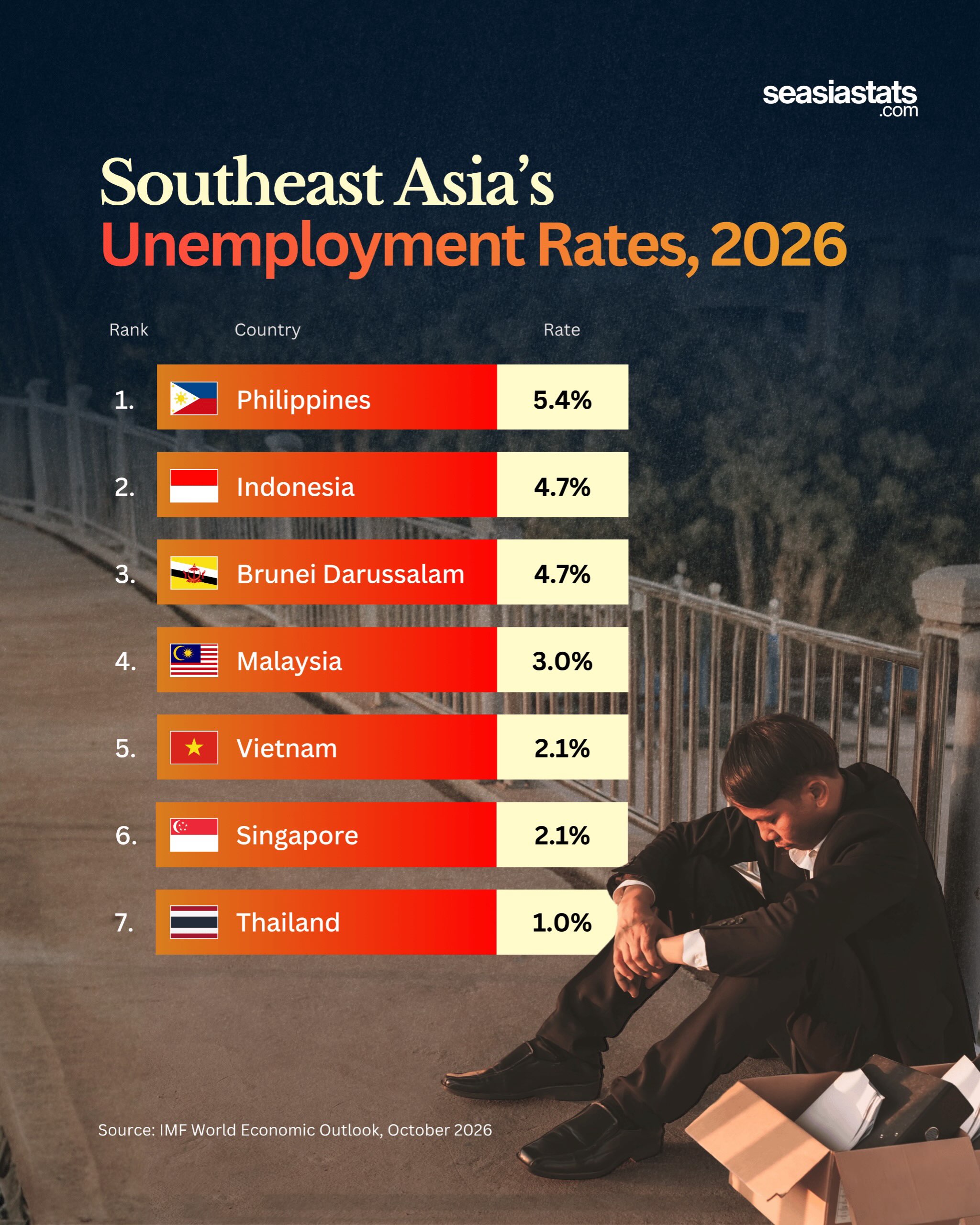
Unemployment remains an important economic issue in Southeast Asia in 2026, reflecting differences in labor market conditions, economic structures, and employment opportunities across the region.
According to the figures provided from the International Monetary Fund's (IMF) World Economic Outlook, these are the unemployment rates in Southeast Asia. These figures illustrate the diverse employment situations across the region.
The Philippines leads the group with an unemployment rate of 5.4%. Despite its expanding service sector and growing economy, the country continues to face challenges in providing sufficient stable and suitable jobs for its workforce.
Improving access to quality employment and strengthening workers' skills remain important priorities for its long-term economic development.
Indonesia and Brunei follow, both recording unemployment rates of 4.7%. In Indonesia, the region's largest economy by population, creating enough productive jobs for a large and growing workforce remains a significant challenge.
Expanding industries, supporting small businesses, and improving vocational education could help create more employment opportunities. Brunei, meanwhile, has a smaller labor market and an economy strongly influenced by the energy sector. Diversifying economic activities could support broader employment opportunities in the years ahead.
Malaysia records an unemployment rate of 3.0%, reflecting a comparatively lower level of unemployment among the countries listed. Its manufacturing, services, and technology industries contribute to job creation, while continued investment and workforce development can help strengthen employment prospects.
Vietnam and Singapore each report an unemployment rate of 2.1%. Vietnam benefits from its manufacturing sector, export-oriented industries, and growing role in international supply chains.
These activities support employment and attract investment. Singapore, despite its small size and highly developed economy, maintains a dynamic labor market supported by finance, technology, logistics, and other high-value services. However, low unemployment does not necessarily eliminate concerns about job security, skills mismatches, or the rising cost of living.
Thailand records the lowest unemployment rate among the seven countries, at just 1.0%. Its tourism, manufacturing, agriculture, and service industries provide employment for millions of people. Nevertheless, a low unemployment rate alone does not fully indicate overall job quality, wages, or the availability of secure work.
Overall, the 2026 figures highlight significant differences in unemployment across Southeast Asia. While lower rates may indicate stronger employment conditions, governments must also focus on job quality, fair wages, productivity, and workforce skills.
By encouraging investment, supporting businesses, and improving education and training, Southeast Asian countries can build more inclusive and resilient labor markets for the future.