

UNESCO World Heritage Sites in Southeast Asia
Indonesia has the most UNESCO World Heritage Sites in Southeast Asia with 10.

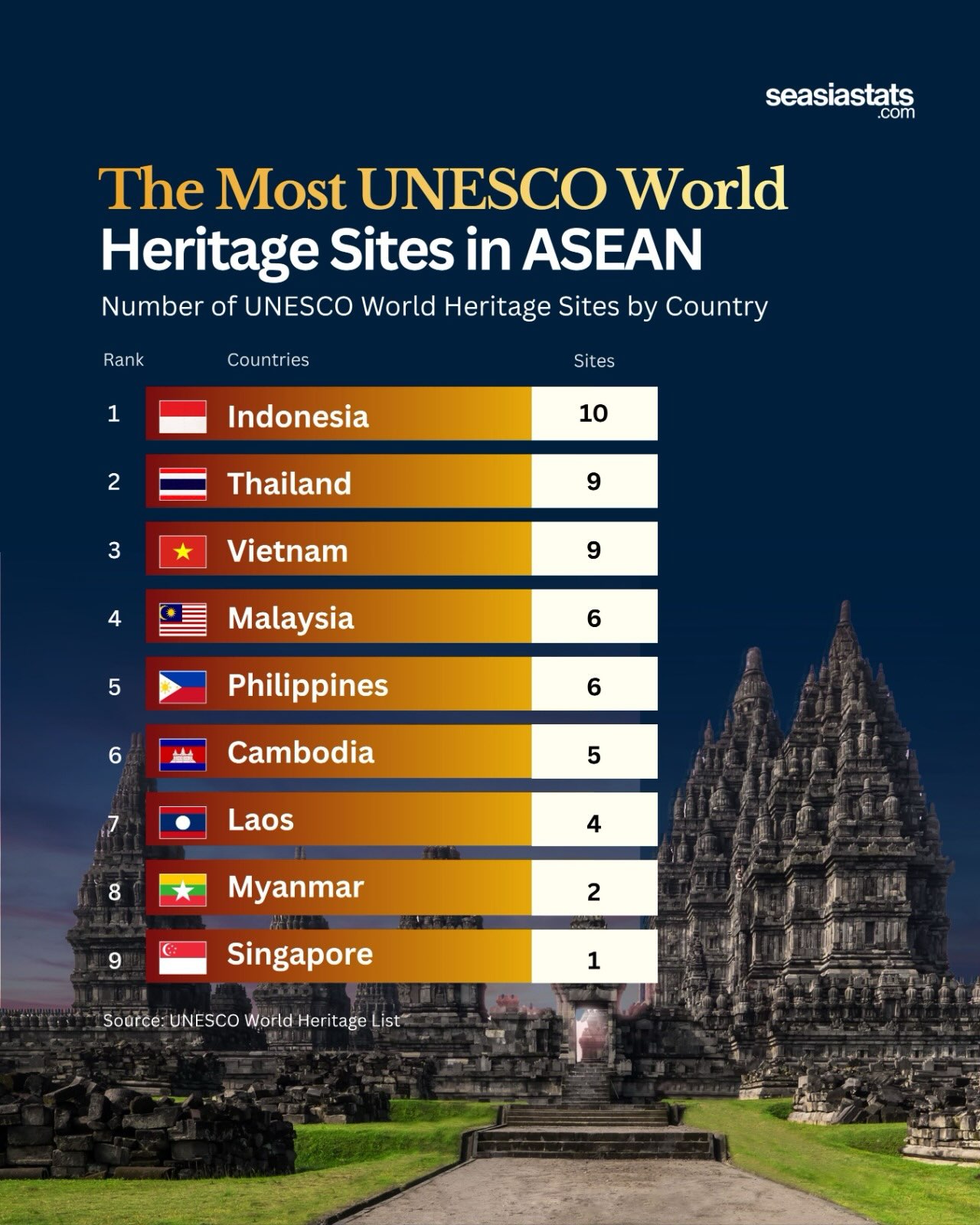
Southeast Asia is one of the world's most culturally and naturally diverse regions, boasting extraordinary historical landmarks, ancient civilizations, breathtaking landscapes, and unique cultural traditions.
From centuries-old temples and archaeological complexes to tropical rainforests and spectacular natural wonders, the region is home to numerous UNESCO World Heritage Sites that reflect its rich heritage and global significance. Among the countries in the region, Indonesia leads the ranking with the highest number of UNESCO World Heritage Sites.
Indonesia takes first place with an impressive 10 UNESCO World Heritage Sites, making it Southeast Asia's leading country in terms of recognized heritage destinations.
Its remarkable collection includes the Borobudur Temple Compounds, Prambanan Temple Compounds, Komodo National Park, and the Tropical Rainforest Heritage of Sumatra. These sites showcase Indonesia's extraordinary combination of cultural, historical, and natural treasures.
Thailand and Vietnam share second place, with nine UNESCO World Heritage Sites each. Thailand is renowned for its magnificent historical destinations, including the Historic City of Ayutthaya and the Historic Town of Sukhothai and Associated Historic Towns.
Meanwhile, Vietnam offers remarkable attractions such as Ha Long Bay, the Complex of Hué Monuments, Hoi An Ancient Town, and the Imperial Citadel of Thang Long in Hanoi.
Malaysia and the Philippines occupy the next position, with six UNESCO World Heritage Sites each. Malaysia is recognized for destinations such as Kinabalu Park, Gunung Mulu National Park, and the historic cities of Melaka and George Town.
The Philippines, meanwhile, is home to extraordinary landmarks, including the Rice Terraces of the Philippine Cordilleras, the Historic City of Vigan, and the Puerto-Princesa Subterranean River National Park.
Cambodia follows with five UNESCO World Heritage Sites, highlighted by the magnificent Angkor Archaeological Park, one of Southeast Asia's most iconic historical attractions. Laos ranks next with four sites, including the Town of Luang Prabang and Vat Phou and Associated Ancient Settlements within the Champasak Cultural Landscape.
Myanmar has two UNESCO World Heritage Sites, including the historic cities of Pyu and Bagan, while Singapore completes the ranking with one site, the Singapore Botanic Gardens.
Overall, these figures demonstrate Southeast Asia's remarkable cultural and natural diversity. Each country contributes unique treasures to humanity's shared heritage, making the region an important destination for history enthusiasts, nature lovers, and international travelers.