

Unique Terms of Endearment Around the World
Around the world, saying how much you love someone could be very different, and unusual.

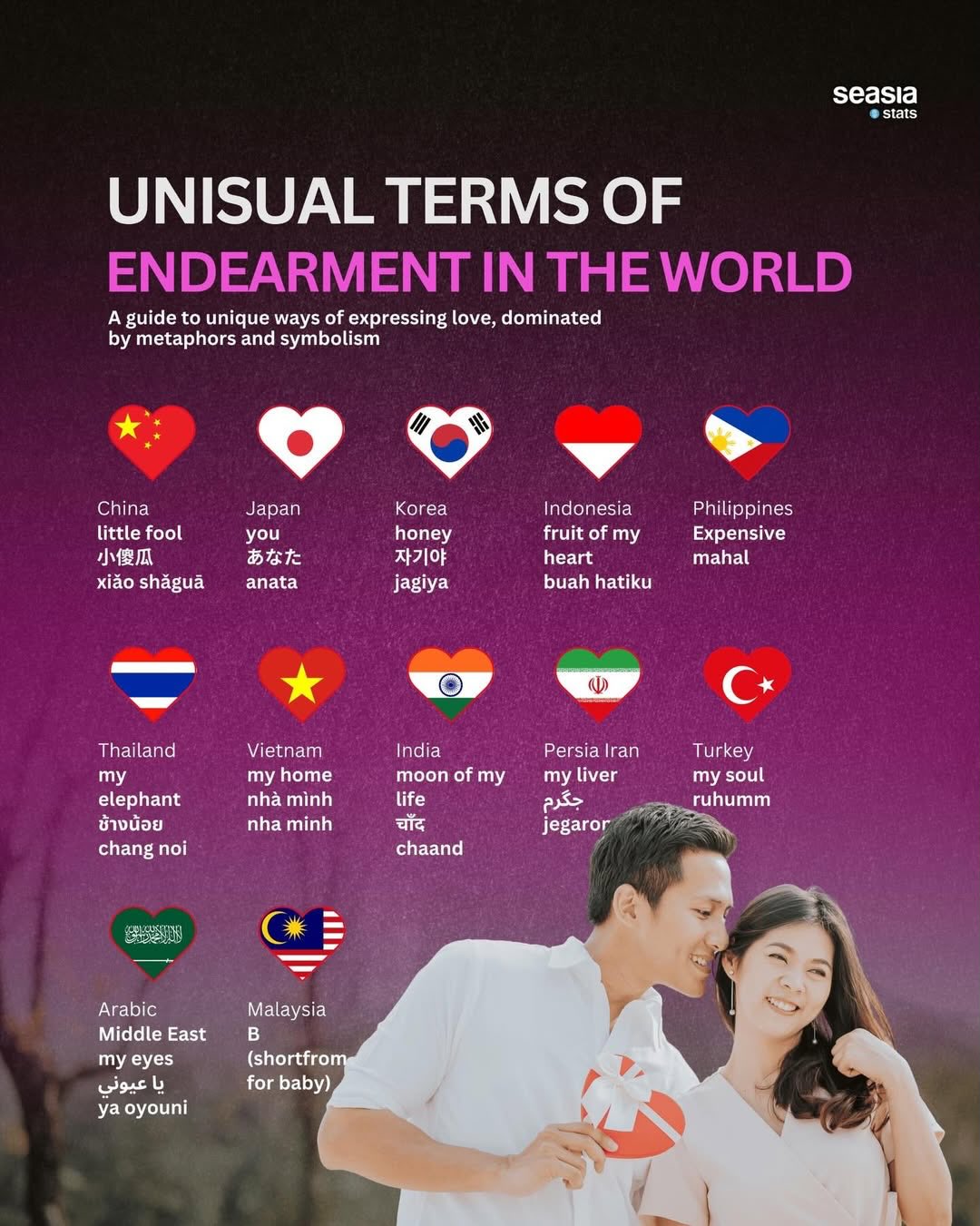
Love sounds different in every language, and around the world people use creative and sometimes surprising terms of endearment to express affection. While many English speakers are familiar with “baby” or “sweetheart,” other cultures use phrases inspired by nature, family, emotions, and even body parts. These unusual expressions reveal how deeply language and culture are connected.
In China, couples may use the phrase “xiao shagua,” which literally means “little fool.” Although it sounds insulting at first, it is actually a playful and affectionate nickname used to tease someone lovingly. It reflects the idea that love often includes humor and closeness.
Meanwhile, in Japan, some partners simply say “anata,” meaning “you.” In romantic relationships, the word carries warmth and intimacy, showing that sometimes simplicity can feel deeply personal.
In South Korea, “jagiya” is a popular expression meaning “honey” or “darling.” It is commonly heard in Korean dramas and songs, making it one of the most recognizable romantic phrases in Asia.
People in Indonesia often say “buah hatiku,” which translates beautifully as “the fruit of my heart.” This poetic phrase is usually used for loved ones or children and symbolizes something precious growing from the heart itself.
In the Philippines, “mahal” means both “love” and “expensive.” The double meaning suggests that loved ones are valuable and priceless.
Thailand offers one of the cutest expressions. In Thailand, “chang noi” means “my little elephant.” Since elephants symbolize strength, loyalty, and good fortune in Thai culture, the phrase is considered deeply affectionate.
In Viet Nam, couples may say “nha minh,” or “my home.” Rather than focusing on appearance, the phrase expresses emotional comfort and belonging.
Romantic imagery also appears in India, where “chaand,” meaning “moon,” is used to describe someone beautiful and precious. The moon has long been associated with romance in Indian poetry and music.
Some cultures use body organs to symbolize love. In Iran, “jegarom,” meaning “my liver,” represents deep affection because the liver was traditionally believed to hold strong emotions. Similarly, in Turkey, “ruhum” means “my soul,” expressing spiritual connection.
In Saudi Arabia, “ya oyouni,” or “my eyes,” suggests that the loved one is as precious as sight itself. Finally, in Malaysia, many young people simply use “b,” short for “baby,” showing how modern slang can become a sweet expression of affection.
These unique nicknames remind us that love may be universal, but every culture expresses it in its own unforgettable way.