

Where Can Southeast Asians Watch the 2026 FIFA World Cup?
World Cup fever is hitting Southeast Asia and here are the TV stations broadcasting the huge football event.

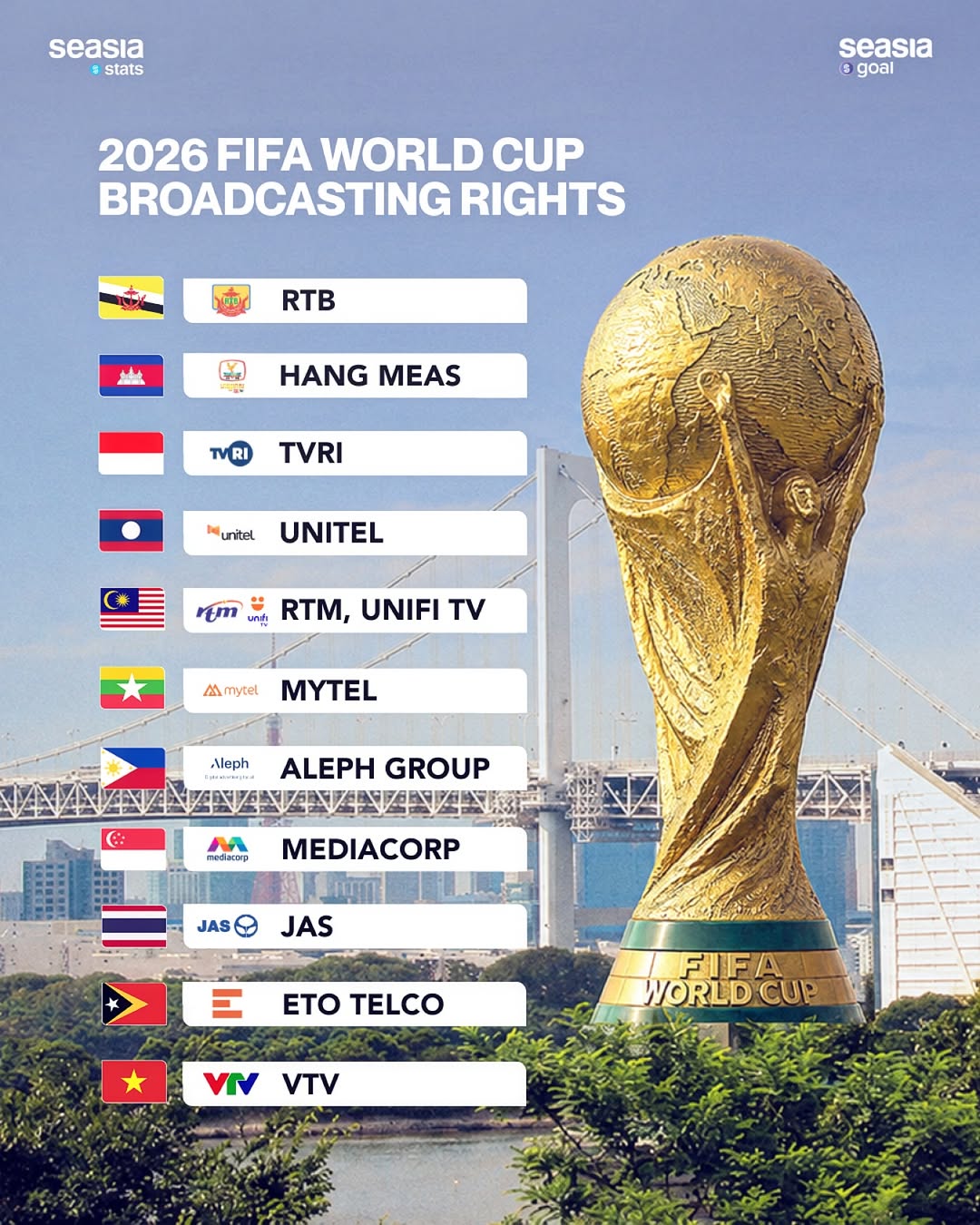
The 2026 FIFA World Cup is set to become one of the biggest sporting events in history, featuring an expanded tournament format and attracting billions of viewers worldwide. Across Southeast Asia, a diverse group of broadcasters and telecommunications companies will play a vital role in bringing the excitement of football's premier competition to millions of fans.
In Brunei, Radio Television Brunei (RTB) will serve as the official broadcaster, continuing its long-standing tradition of delivering major international sporting events to local audiences. Cambodian viewers will be able to follow the tournament through Hang Meas, one of the country's leading media networks.
Indonesia's coverage will be provided by TVRI, the nation's public broadcaster. With its extensive national reach, TVRI will ensure that football fans across the archipelago can enjoy live matches, highlights, and tournament-related programming. In Laos, Unitel will deliver World Cup coverage through its telecommunications and media platforms.
Malaysia will feature a dual-platform approach, with Radio Televisyen Malaysia (RTM) and Unifi TV sharing broadcasting responsibilities. This combination of free-to-air and subscription television services will provide Malaysian viewers with comprehensive access to the tournament.
In Myanmar, Mytel will bring the action to football enthusiasts throughout the country. The company continues to expand its role in sports broadcasting and digital entertainment services. Meanwhile, viewers in the Philippines will receive coverage through Aleph Group, helping connect Filipino football fans with every major moment of the competition.
Singapore's World Cup broadcasts will be handled by Mediacorp, one of the region's most respected media organizations. Through its television and digital platforms, Mediacorp will offer extensive coverage of matches, analysis, and special features.
Thailand's rights holder is JAS (Jasmine International), which has become increasingly involved in major sports broadcasting projects. The company is expected to provide broad access to World Cup content for Thai audiences through multiple distribution channels.
In Timor-Leste, Eto Telco will deliver tournament coverage, reflecting the growing importance of telecommunications companies in sports media distribution. Vietnamese fans, meanwhile, will follow the World Cup through Vietnam Television (VTV), a broadcaster with a strong history of presenting major international football tournaments.
Together, these broadcasters demonstrate the diverse media landscape of Southeast Asia. By combining traditional television networks with modern telecommunications platforms, they will help ensure that the excitement, drama, and unforgettable moments of the 2026 FIFA World Cup reach fans across the region.