

Where Expats Send the Most Money Home
Around the world, millions of people leave their home countries to seek better opportunities abroad — and many send a significant portion of their earnings ba

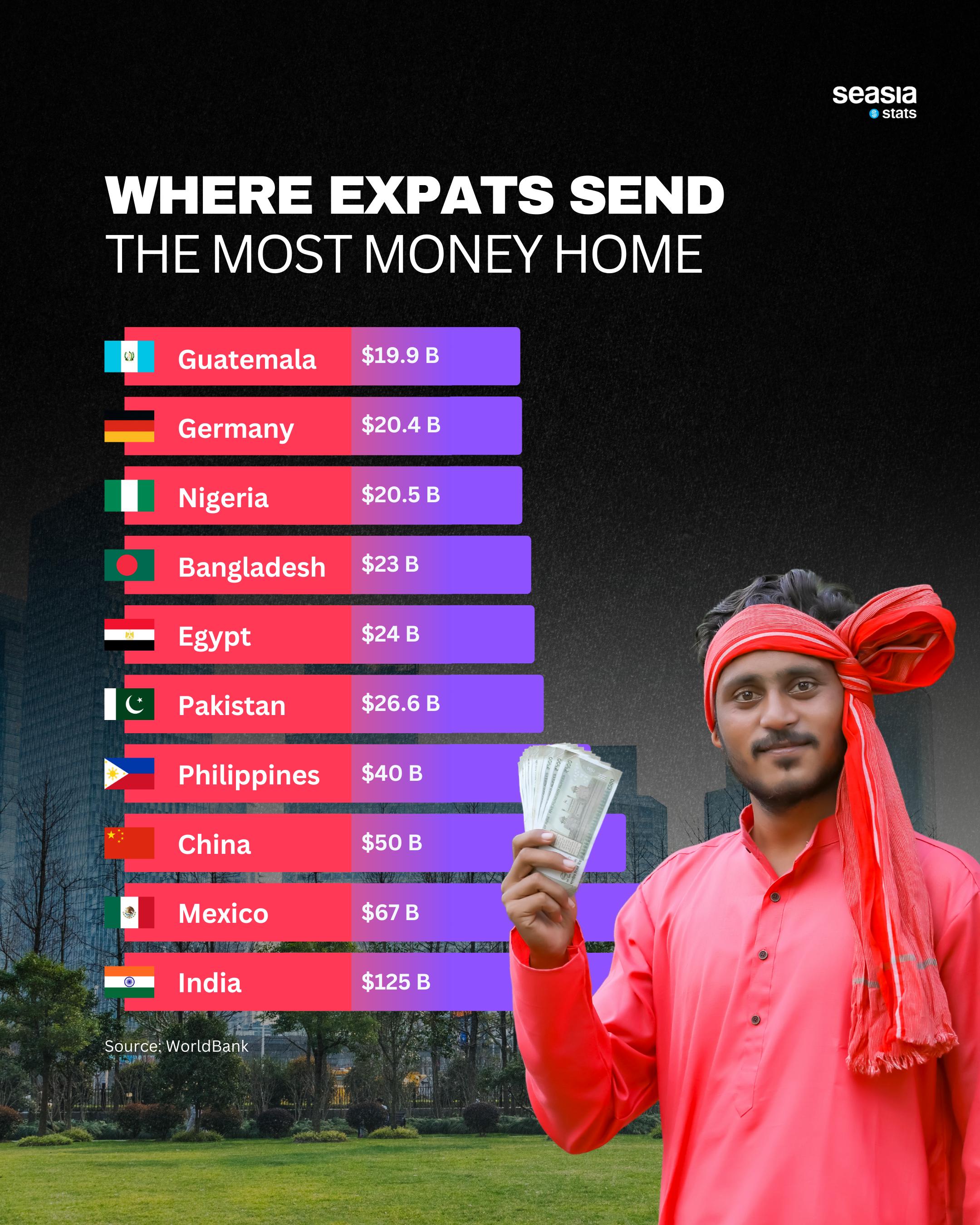
Around the world, millions of people leave their home countries to seek better opportunities abroad — and many send a significant portion of their earnings back home. These remittances are more than just money; they’re a lifeline for families and a key part of national economies. A new chart based on World Bank data shows just how impactful this financial support can be.
Leading the global list by a wide margin is India, whose citizens sent home an incredible $125 billion in remittances — more than the next two countries combined.
India, Mexico, and China Lead the Pack
India’s dominance in global remittance flows reflects both its large diaspora and the high-skilled nature of its overseas workforce. From tech workers in the U.S. to laborers in the Gulf, Indian expats contribute massively to their homeland's economy.
In second place is Mexico, receiving $67 billion in 2024, much of it coming from workers in the United States. China follows with $50 billion, rounding out the top three.
Southeast Asia’s Strong Contender: The Philippines
Coming in at fourth place is the Philippines, with $40 billion in remittances. The country has long depended on its overseas Filipino workers (OFWs), who work in healthcare, shipping, domestic service, and other industries around the world.
Remittances have become a pillar of the Philippine economy, helping fund education, healthcare, and housing for millions of families.
The Rest of the Top 10
Following the top four are:
-
Pakistan: $26.6 billion
-
Egypt: $24 billion
-
Bangladesh: $23 billion
-
Nigeria: $20.5 billion
-
Germany: $20.4 billion
-
Guatemala: $19.9 billion
These figures show how remittances serve both developing and developed nations — with money flowing back home from workers in sectors ranging from construction and caregiving to business and tech.
More Than Money: A Lifeline for Families and Nations
For many developing countries, remittances are not just personal — they are macroeconomic. In places like Bangladesh, Egypt, and Guatemala, they often account for a significant share of GDP, propping up local economies, reducing poverty, and improving access to services.
Meanwhile, countries like Germany and China benefit from highly mobile and often skilled citizens contributing to dual economies across continents.