

Which Countries Produce the Most Oil?
Oil has become one of the most important commodities in the world with a handful of countries leading the way in its production.

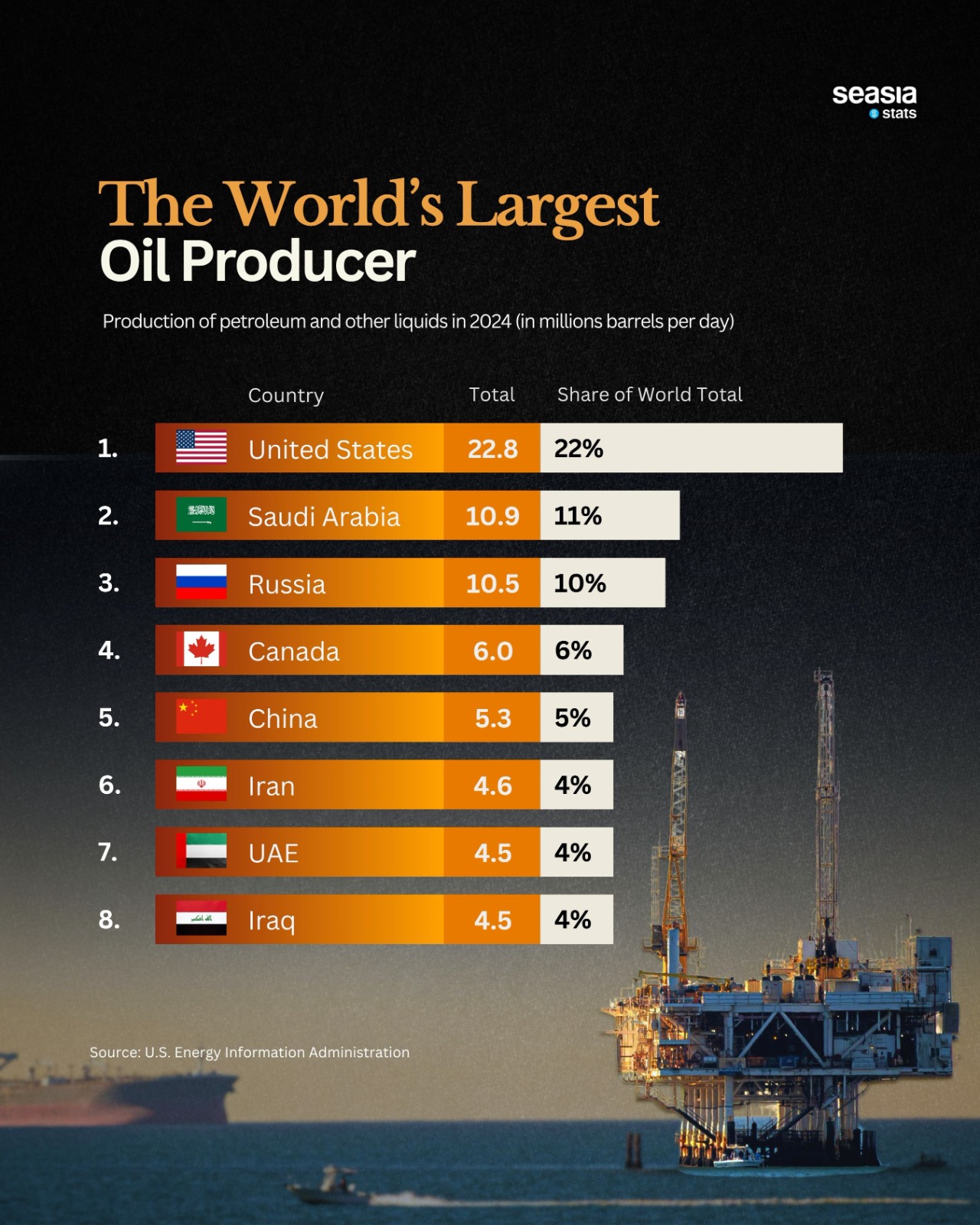
Oil production is one of the most important factors shaping the global economy, influencing energy prices, trade balances, and geopolitical power. A small group of countries dominates global oil output, collectively supplying most of the world’s petroleum.
The United States is the world’s largest oil producer, generating about 22.8 million barrels per day, which accounts for roughly 22% of global production. Its rapid rise in production is driven largely by advances in shale oil extraction, making it a leading energy powerhouse and a key exporter in global markets.
In second place is Saudi Arabia, producing around 10.9 million barrels per day, or about 11% of the world total. As a core member of OPEC, Saudi Arabia plays a crucial role in stabilizing global oil prices through its ability to adjust production levels.
Russia follows closely, producing about 10.5 million barrels per day, contributing roughly 10% of global output. Russia remains one of the most influential energy exporters, especially to Europe and Asia, despite geopolitical and economic sanctions affecting its energy sector.
Canada is the fourth-largest producer with approximately 6.0 million barrels per day, accounting for 6% of global production. Much of Canada’s output comes from its vast oil sands reserves, particularly in Alberta.
China, although best known as a major oil consumer, also produces around 5.3 million barrels per day, or 5% of global supply. However, its consumption far exceeds its production, making it heavily dependent on imports.
Several Middle Eastern countries remain key contributors to global oil supply. Iran produces about 4.6 million barrels per day (4%), while both the United Arab Emirates and Iraq produce roughly 4.5 million barrels per day each (4% each). These nations are strategically important due to their large reserves and proximity to major shipping routes.
Together, these countries form the backbone of global oil production. Their output not only powers transportation and industry worldwide but also shapes international relations and energy security. Despite the rise of renewable energy, oil remains a central resource, and these leading producers will continue to influence the global economy for years to come.