

Why the World’s Biggest Sleep Lovers Live in Southeast Asia
In a fast-paced, always-connected world, sleep has become a luxury—and in 2025, some countries value it more than others.

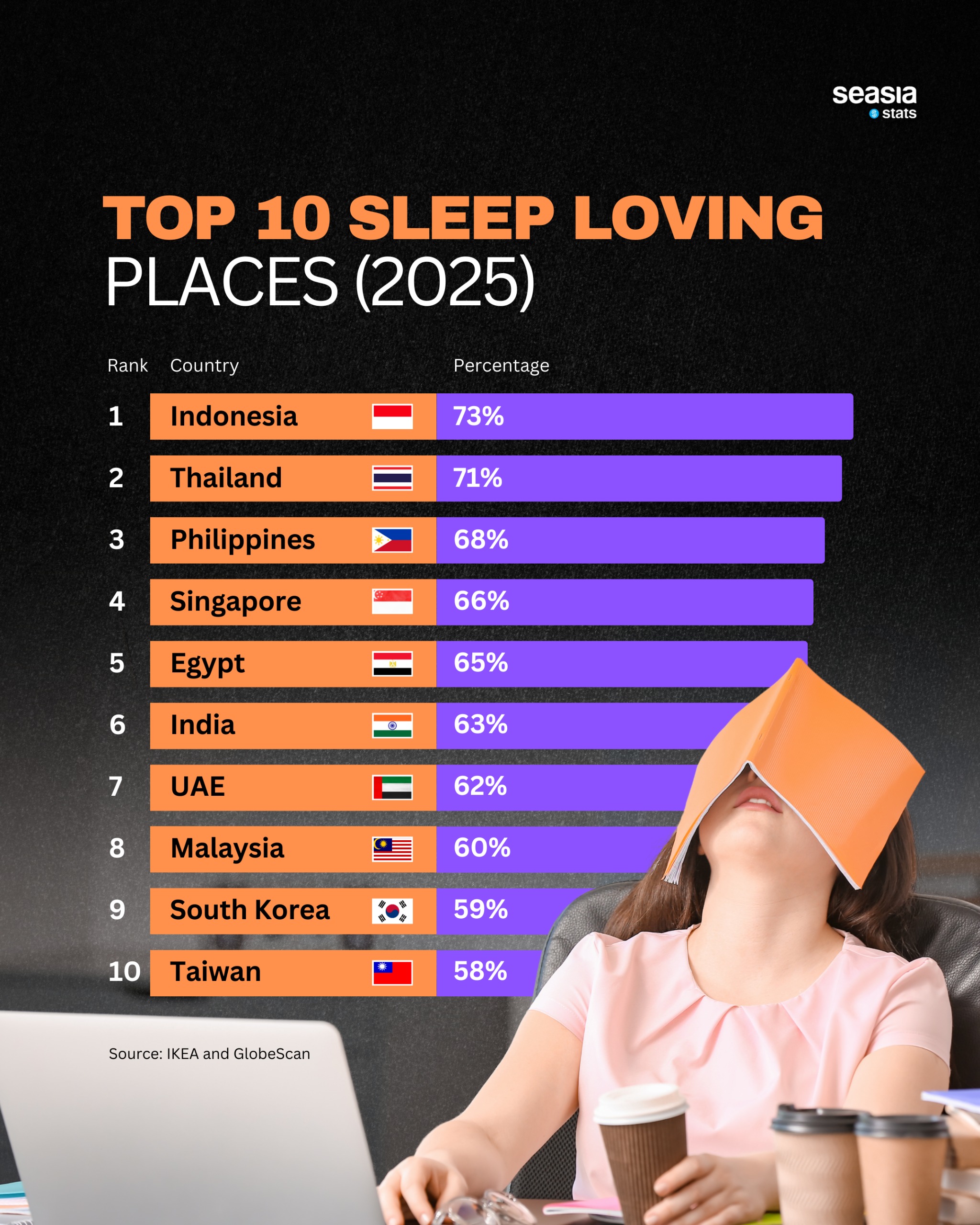
In a fast-paced, always-connected world, sleep has become a luxury—and in 2025, some countries value it more than others. According to a joint study by IKEA and GlobeScan, compiled by Seasia Stats, the world’s most sleep-loving populations are overwhelmingly concentrated in Southeast Asia. The findings highlight not just bedtime habits, but deeper cultural attitudes toward rest, balance, and quality of life.
Indonesia Leads the World in Sleep Appreciation
Topping the global ranking is Indonesia, where an impressive 73% of respondents identify as sleep-loving. This reflects a cultural rhythm that still allows room for rest despite rapid urbanization. Flexible work arrangements, strong family networks, and a climate that naturally encourages slower afternoons all contribute to Indonesians’ positive relationship with sleep.
Thailand and the Philippines Close Behind
In second place is Thailand at 71%. Thailand’s long-standing acceptance of short daytime rests—especially outside major cities—plays a role, as does its emphasis on well-being and leisure.
Third-ranked Philippines follows closely at 68%. Despite dense cities and long commutes, Filipinos consistently express high appreciation for sleep, often compensating with weekend rest and flexible household schedules. Strong social bonds and communal living also help buffer sleep stress.
Singapore’s Surprising Position
At first glance, Singapore ranking fourth at 66% may seem unexpected, given its reputation for long working hours. Yet the city-state’s high sleep awareness reflects growing public discourse around mental health, workplace burnout, and wellness. Employers are increasingly promoting rest-friendly policies, while residents invest heavily in sleep technology and optimized bedroom environments.
Malaysia Completes Southeast Asia’s Strong Showing
Further down the list, Malaysia ranks eighth with 60%. Malaysia’s multicultural lifestyle, balanced pace of life outside Kuala Lumpur, and strong emphasis on family time contribute to a relatively healthy sleep culture. Together, Indonesia, Thailand, the Philippines, Singapore, and Malaysia form a clear Southeast Asian cluster dominating the global top ten.
Middle East and South Asia Join the Rankings
Outside Southeast Asia, Egypt ranks fifth at 65%, followed by India at 63%. In both countries, sleep patterns are shaped by climate, late-night social routines, and growing awareness of rest-related health issues.
The United Arab Emirates appears at seventh place with 62%, reflecting how extreme heat and late-evening lifestyles influence sleep schedules.
East Asia Rounds Out the Top Ten
Completing the list are South Korea (59%) and Taiwan (58%). Both societies are known for intense work and academic pressures, making their presence notable—and possibly reflective of a growing desire to reclaim rest in highly competitive environments.
What the Rankings Reveal
Ultimately, the 2025 sleep-loving rankings show that valuing rest is as much cultural as it is personal. Southeast Asia’s dominance suggests that strong social ties, flexible lifestyles, and climate-driven rhythms still matter—even in an era of constant connectivity. As global conversations around burnout and well-being continue, the world may increasingly look to these regions for lessons on how to sleep better—and live better.