

World's Fastest Developing Cities, 2024
Asia is taking center stage in the global urban landscape, with cities across the continent rapidly evolving into hubs of growth and innovation. According to th

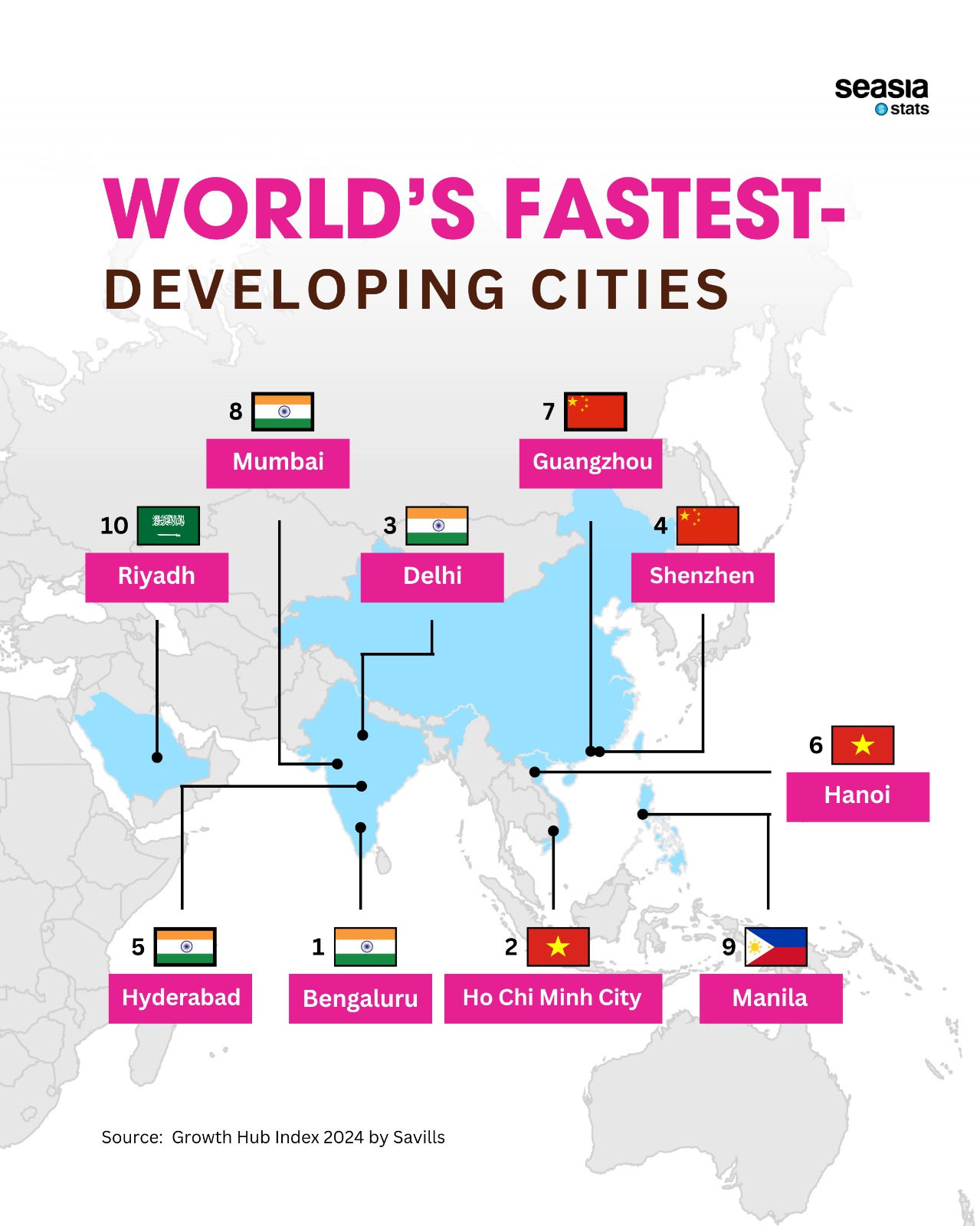
Asia is taking center stage in the global urban landscape, with cities across the continent rapidly evolving into hubs of growth and innovation. According to the Growth Hub Index 2024 by Savills, Asian cities dominate the list of the world’s fastest-developing urban areas, led by cities in India, Southeast Asia, and China.
India: A Rising Urban Star
India’s urban transformation is remarkable, with five cities ranked among the top 10 globally.
- Bengaluru: Claiming the top spot, Bengaluru has become synonymous with technological innovation and entrepreneurship. Its vibrant tech sector has turned it into a global leader, earning it the title of the fastest-developing city in the world.
- Delhi and Mumbai: These metropolitan giants contribute significantly to India’s economic and cultural clout. Delhi thrives as the country’s political capital, while Mumbai anchors its financial sector.
- Hyderabad and Chennai: Both cities combine traditional industries with modern technology, creating a balanced yet dynamic urban identity.
India’s dominance on this list is no coincidence. Its rapid economic growth, coupled with an expanding middle class, has created fertile ground for urban development on an unprecedented scale.
Southeast Asia: A Growth Epicenter
Southeast Asia is also experiencing an urban boom, driven by rising incomes and increased foreign investment.
- Ho Chi Minh City (Viet Nam): Ranked second globally, this bustling economic hub exemplifies Viet Nam’s emergence as a regional powerhouse. Its mix of industrial growth, modern infrastructure, and increasing disposable incomes makes it a magnet for development.
- Manila (Philippines): Manila is riding a wave of urbanization fueled by foreign investment and a growing middle class. Its rapid transformation reflects the Philippines’ broader economic ambitions.
These cities illustrate Southeast Asia’s growing importance in the global economic and urban landscape, showcasing the region's resilience and potential.
China: Technological Pioneers
Although China’s economic growth has moderated, its cities remain major players in the urban arena.
- Shenzhen: Often referred to as the "Silicon Valley of Hardware," Shenzhen is a global leader in tech and innovation.
- Guangzhou: Known for its industrial prowess and strategic location, Guangzhou remains a cornerstone of China’s economic strategy.
These cities highlight China’s continued role as a global urban innovator, even as its growth slows compared to past decades.
Riyadh: Middle Eastern Ambitions
In a surprising addition to the list, Riyadh in Saudi Arabia has emerged as a contender in the global urban landscape. Backed by Saudi Arabia’s Vision 2030 plan, Riyadh is undergoing significant transformation, with ambitions to become a global hub for business and tourism. Its inclusion underscores the Middle East's growing focus on urban development as a driver of diversification and growth.
The Global Implications of Asia’s Urban Revolution
The rapid rise of Asian cities has far-reaching consequences:
- Economic Powerhouse: With their dynamic economies, these cities are poised to lead global commerce and innovation in the coming decades.
- Cultural Influence: Asia’s urban centers are shaping global trends in technology, culture, and lifestyle.
- Geopolitical Shifts: The concentration of urban growth in Asia signals a shift in the global balance of economic and political power.
As this urban revolution continues, it will redefine the world’s economic and cultural dynamics. The rapid development of cities like Bengaluru, Ho Chi Minh City, and Shenzhen highlights Asia’s role as the driving force behind the urban future.